

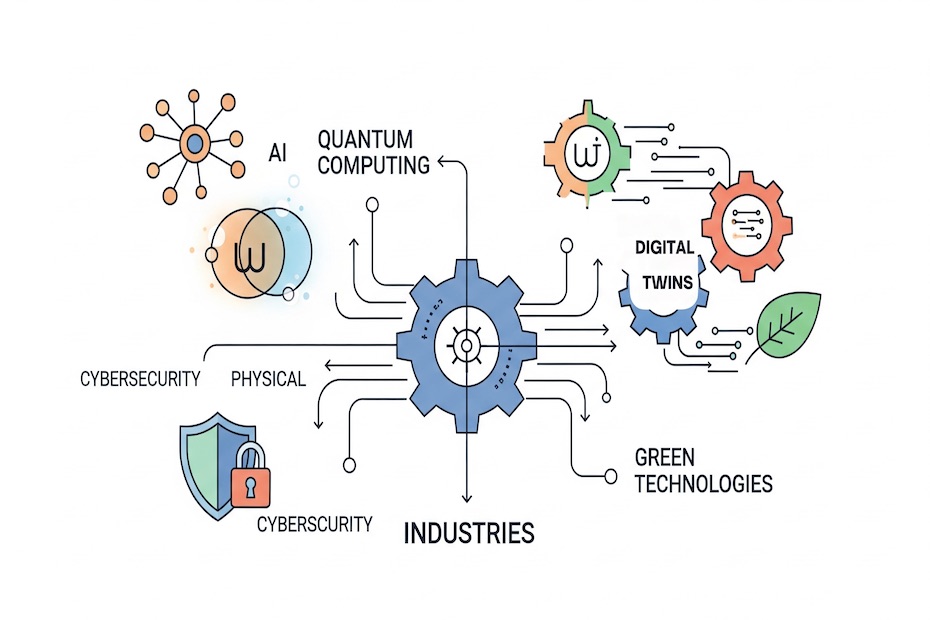
The top emerging technologies reshaping industries are Agentic/Generative AI, Quantum Computing, Digital Twins with XR, Next-Gen Cybersecurity, and Sustainable Green Technologies.
You are living through a period where five key technologies are set to redefine industries. These aren’t distant concepts—they’re already influencing how businesses operate, scale, and compete. In this article, you’ll see each technology explained with real-world relevance, adoption examples, and guidance for how to prepare.
1. Agentic and Generative AI
Agentic AI systems can plan, adapt, and execute tasks independently, while generative AI creates new content across text, code, images, and more.
McKinsey projects these tools could add USD 2.6–4.4 trillion annually to global business value. Already, they’re powering chatbots, marketing automation, AI-generated reports, and even product design.
By adopting AI, you automate repetitive work and enable decision-making at speed. That shifts your workforce from manual processing to strategic analysis and innovation.
2. Quantum Computing
Quantum computing uses qubits to solve problems beyond classical limits. Its strength lies in optimization, simulation, and cryptography.
Industries most likely to benefit include pharmaceuticals (drug discovery), logistics (supply chain optimization), and finance (risk management). Major banks already test quantum algorithms to improve fraud detection and portfolio performance.
Your next move is to stay informed on quantum-safe encryption and explore pilot projects with providers. Being early positions you ahead of slower competitors once quantum systems scale.
3. Digital Twins and Extended Reality (XR)
Digital twins are virtual replicas of assets, processes, or systems updated in real time. XR—augmented and virtual reality—lets you interact with those replicas in immersive ways.
Factories reduce downtime by simulating machine performance before breakdowns. Construction projects use XR to overlay digital plans onto worksites, cutting costly rework. Smart cities simulate traffic and energy demand with digital twins.
For your organization, these tools can drive cost savings, reduce risk, and accelerate design or production cycles by enabling real-time experimentation.
4. Next-Generation Cybersecurity
Cybersecurity now demands advanced strategies to protect against complex threats. Next-gen tools include AI-powered detection, zero-trust systems, and quantum-resistant cryptography.
Gartner projects cybersecurity spending will surpass USD 200 billion by 2026, reflecting the scale of threats businesses face. From ransomware to deepfakes, attacks are more sophisticated and more damaging.
You must ensure data security isn’t just about compliance but trust. Customers and regulators expect resilient systems that can withstand attacks while protecting sensitive information.
5. Sustainable and Green Technologies
Sustainable technologies encompass renewable energy, carbon capture, battery innovation, and circular economy practices. Global clean energy investment is on track to exceed USD 2 trillion annually by 2030.
Industries are adopting these solutions to cut emissions, reduce costs, and meet regulatory expectations. From EV battery storage to carbon capture in heavy industry, green innovation is becoming central to competitiveness.
You should integrate sustainability into operations, not just branding. Green tech creates financial savings, market differentiation, and long-term resilience in an environmentally constrained world.
Which industries are adopting these technologies fastest?
- Manufacturing: digital twins and AI-driven robotics
- Healthcare: generative AI for diagnostics and drug discovery
- Finance: quantum algorithms for risk modeling
- Energy: renewable power, battery storage, carbon capture
- Construction: XR and digital planning systems
Industries adopting now are already realizing cost savings and improved efficiency. Those waiting risk losing relevance.
Which technologies will reshape industries?
- AI and Generative AI: automate tasks and create content
- Quantum Computing: optimize and simulate at scale
- Digital Twins + XR: virtual-physical integration
- Cybersecurity: advanced trust protection
- Green Tech: sustainable energy and materials
In Conclusion
Five technologies—Agentic/Generative AI, Quantum Computing, Digital Twins with XR, Next-Gen Cybersecurity, and Sustainable Technologies—are already reshaping industries. By piloting, scaling, and governing them carefully, you’ll gain efficiency, trust, and market leadership while preparing your business for a new era of competition.

